

61 Years of the Voting Rights Act—and the Fight Isn’t Over
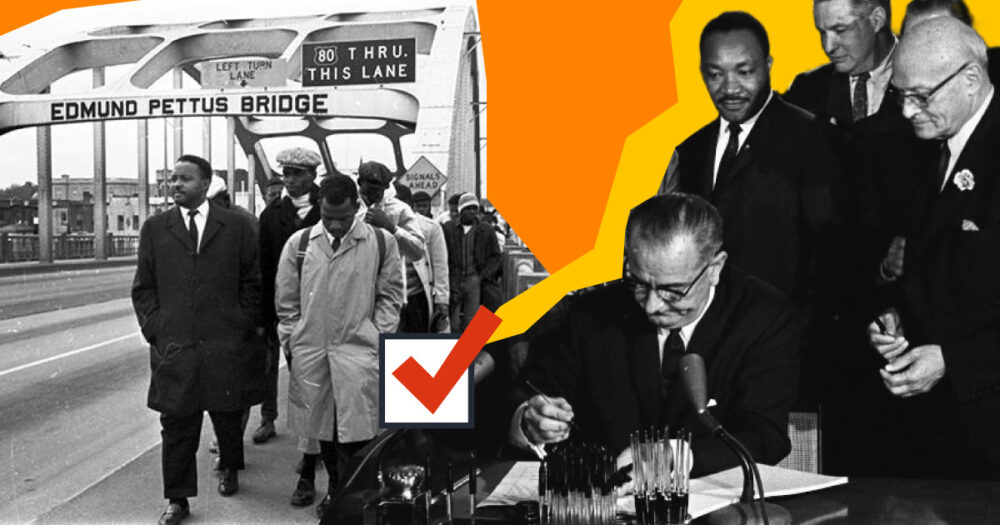
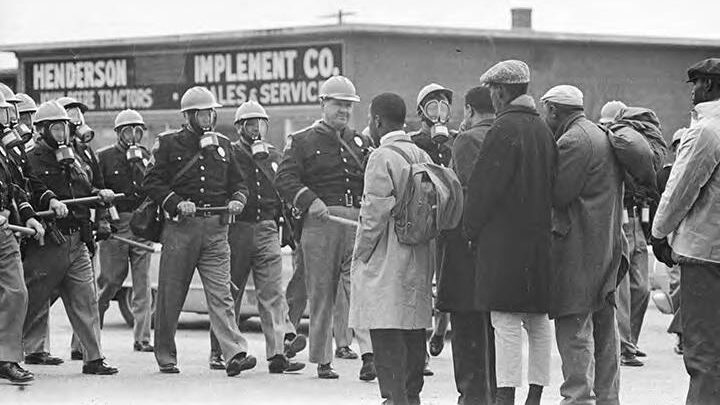
On August 6, 1965, President Lyndon B. Johnson signed the Voting Rights Act (VRA) into law with Dr. Martin Luther King Jr. and Rosa Parks standing in the room. It happened because five months earlier, on March 7, 600 foot soldiers marched across the Edmund Pettus Bridge in Selma to take a stand about their right to vote. They were met by state troopers with tear gas, clubs, and horses – a violent moment in our nation’s history that placed the voting rights issue front and center in the minds of the American public. Among these marchers was an 11-year-old Jo Ann Bland, our late co-founder. At the time, only 335 of Selma’s roughly 15,000 Black residents of voting age were registered to vote.
The VRA did what it was written to do – outlaw the literacy tests, poll taxes, and the tricks states used to keep Black voters out of the election process. States and counties with a history of discrimination had to get any changes to voting rules approved by the federal government first. By 1967, more than half of all Black Americans were registered to vote.
As Foot Soldiers Park CEO Kimberly Smitherman put it at this year’s VRA Anniversary event, “no victory is permanent, and every win needs to be protected at all times.”
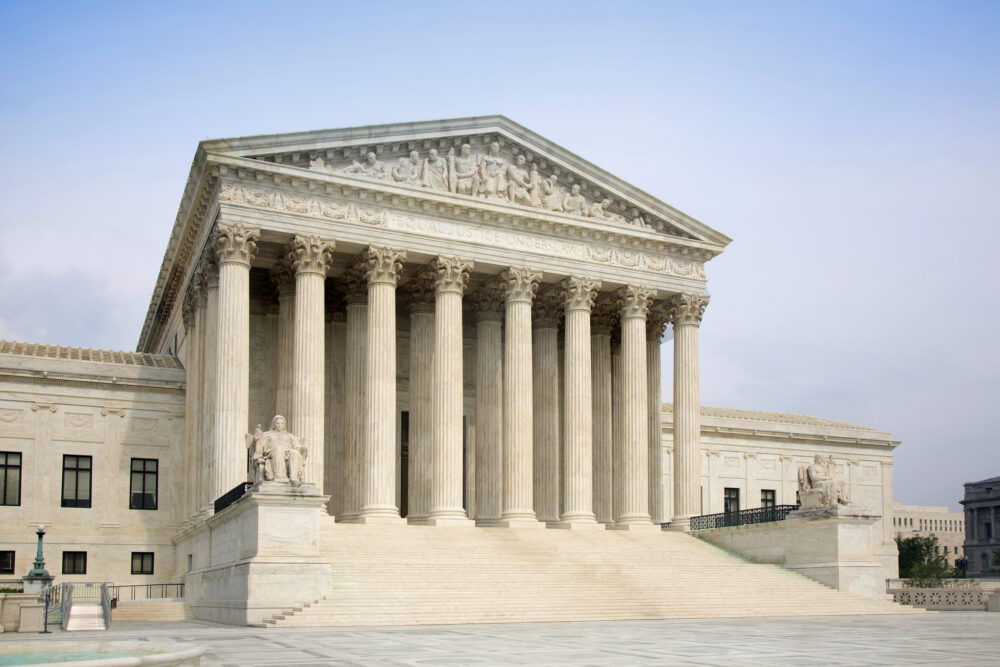
That warning proved true this past April when the Supreme Court weakened Section 2 of the Voting Rights Act — the tool communities use to challenge voting maps drawn to weaken their voice. The justices rewrote Section 2 to require proof of intentional racial discrimination — a standard nearly impossible to meet, and eerily close to the impossible tests used to block Black voters during Jim Crow.
Alabama lawmakers were in a special session within a week, reaching back for a congressional map a court had already thrown out for diluting Black voting power. By June, the state was using it anyway. Alabama is more than a quarter Black. Two of its seven congressional seats belonged to Black voters — a second seat that took three years in court to win. It took five weeks to remove.
Discrimination doesn’t always announce itself. It shows up in precinct closures and absentee ballot restrictions — the same old goal wearing new language. And sometimes, like in Alabama, it’s not even subtle: lawmakers reaching back for a map a court had already thrown out and using it anyway.
This is what happens when national protections weaken: communities like Selma feel it first. It’s also why Foot Soldiers Park exists — to preserve the truth of what Selma sacrificed, and to build the civic infrastructure that keeps that sacrifice from being erased quietly, one redrawn map at a time.
Sixty-one years after the signing, the question is the same one the foot soldiers answered on that bridge: whether the systems around the right to vote are built to protect it, or built to erode it. Selma has answered that question before, by organizing, marching, and voting until the law had no choice but to catch up. That’s the answer now, too.
Sign up and stay connected!
Sign up today and stay up to date on the latest news from our team and how you can get involved.